
Scanning Process
1. Creating a New Project
1.1. Launch the Software
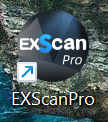
- Open the software – “EXScan Pro” located on the Desktop.
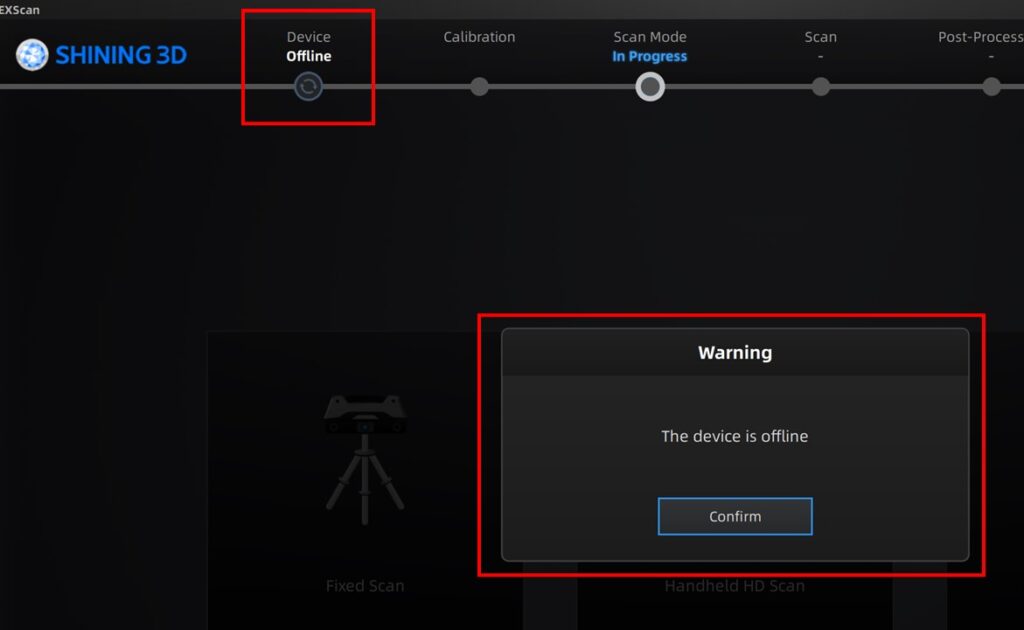
- Make sure the software has recognised the scanner. The status should display “Online”.
Note:
If the status displays “Offline”, ensure all cables are securely connected. If everything is correctly plugged in, try clicking “Refresh” or restart the software.”

1.2. Select Scanning Mode
- Select “Handheld Scan” in the software. (“Handheld Rapid Mode” is recommended.)
Note:
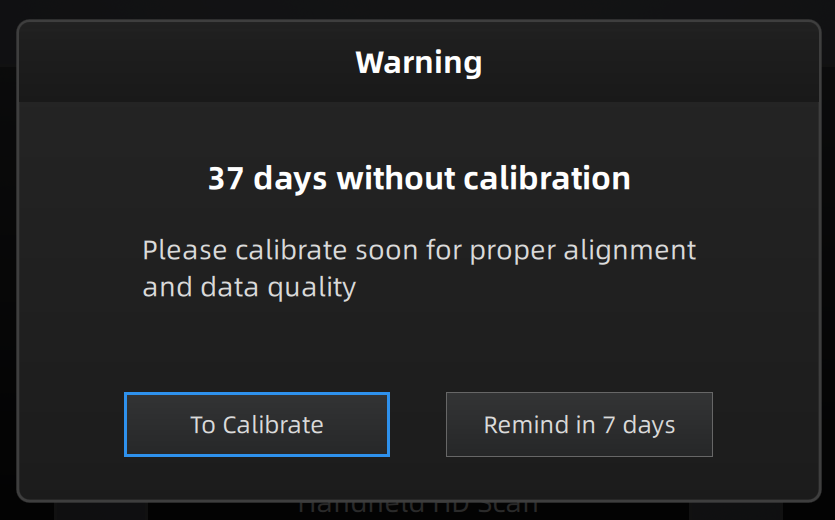
After selecting the scan mode, a calibration warning will appear. Click “Remind in 7 days”.
1.3. Create a Project
- Click “New Project” and enter the project name.
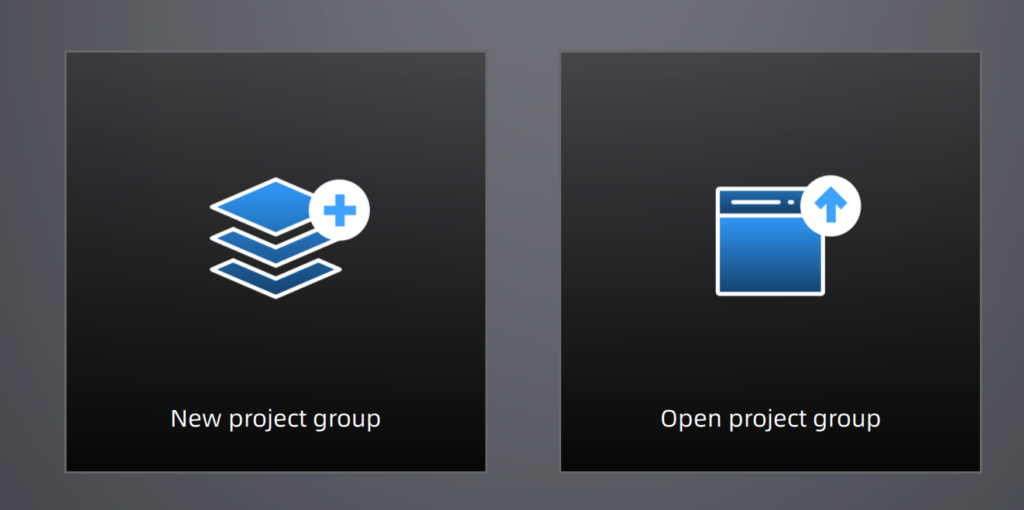
- By default, projects are saved to the Desktop.
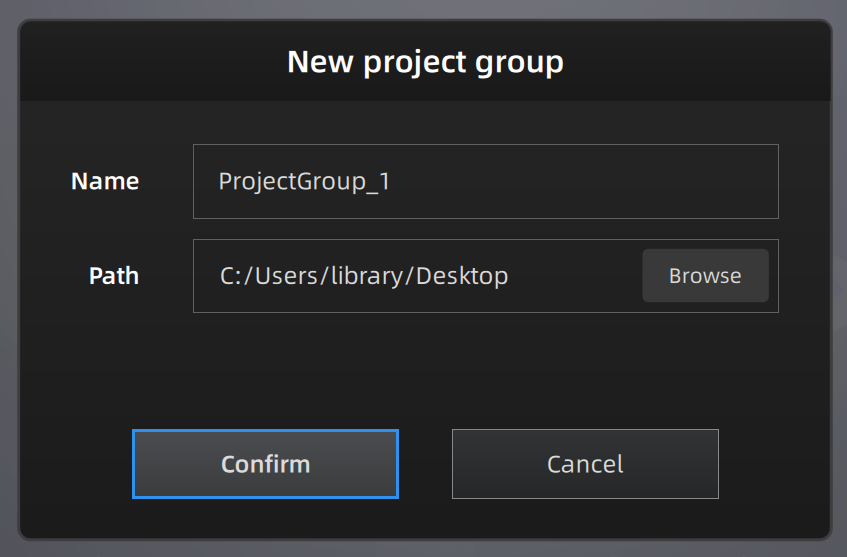
Note:
- Save the project on the laptop first to keep the software running smoothly during scanning.
- After completing the scanning and editing, users should transfer their files online or to their own storage devices. Files saved in laptops will be erased when the laptop is rebooted. The Library is not responsible for any leakage of personal data or data loss.
1.4. Select Align Mode
Select the align mode according to the object’s characteristics:
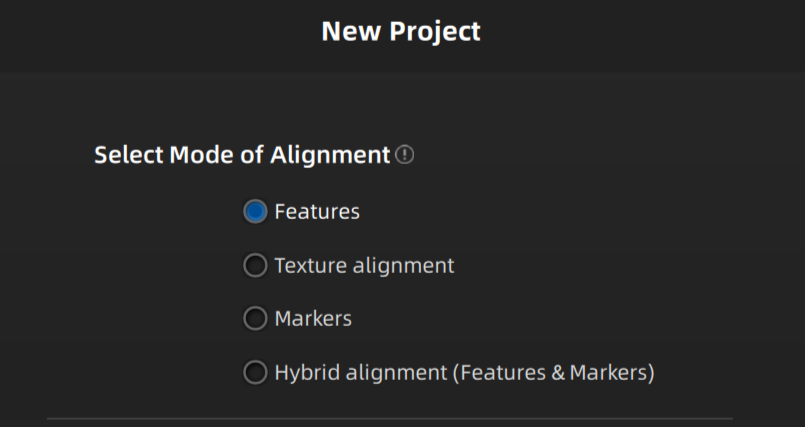
Feature Alignment:
- Use the object’s shape for recognition.
- Ensure the object is not symmetrical and does not include repeating features
Texture Alignment:
- Use the object’s colour pattern for recognition.
- Ensure the object does not have large sections with repeating colour patterns.
The below align modes require markers, please note that markers are not provided.
Markers Alignment:
- Use special markers sticking on the object for recognition.
Hybrid Alignment:
- Combine features and markers for alignment.
Note:
View more details about each align mode by hovering over the “i” icon.
2. Preview the Scanning
2.1. Preview the Scan
- Place the object on a stable, non‑reflective surface.
- Position the scanner at the desired starting point.
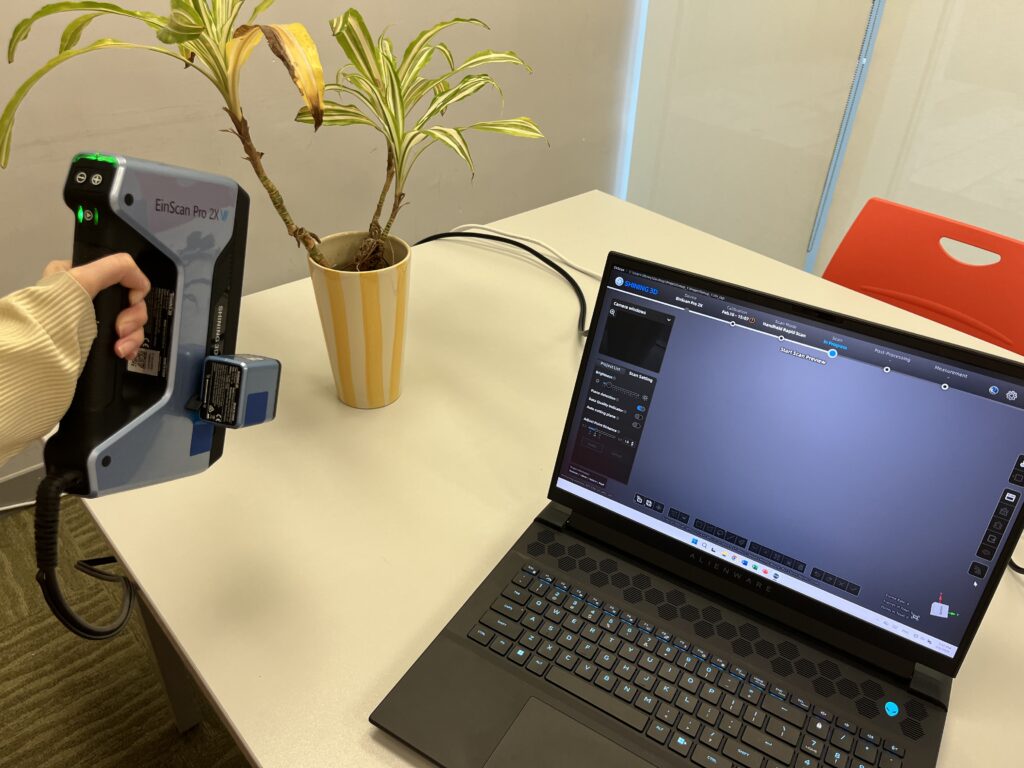
To enter preview mode,
- Press the “Play” button on the scanner OR click “Preview” on the screen.
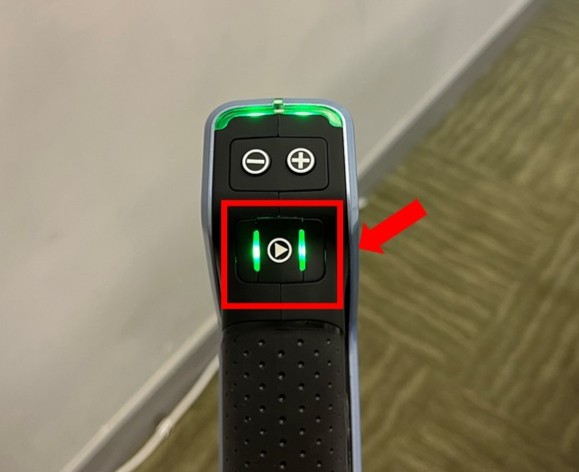
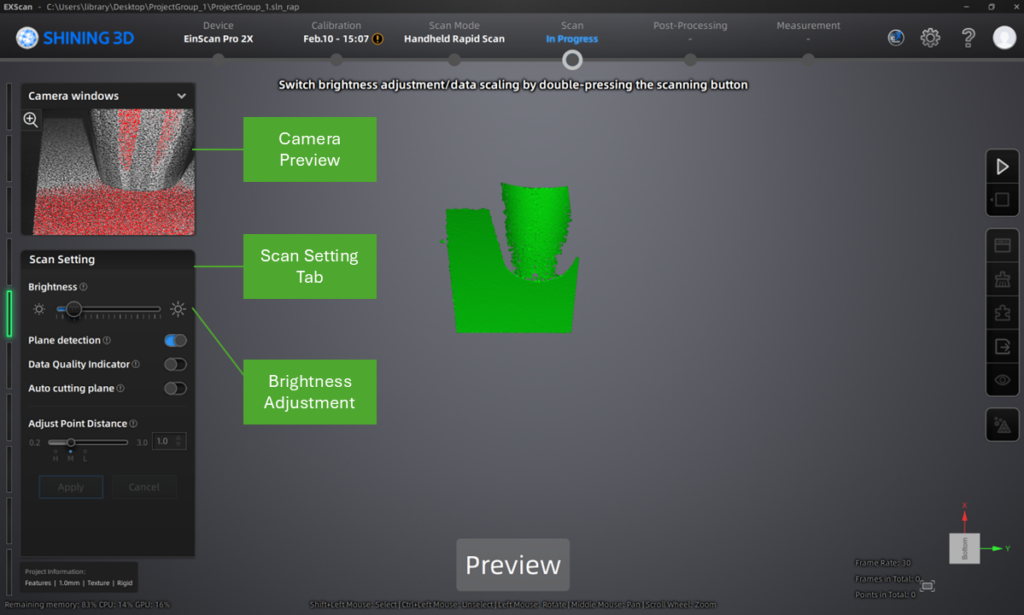
- Adjust the settings as needed before starting the scan.
2.2. Adjust the Distance of Scanner
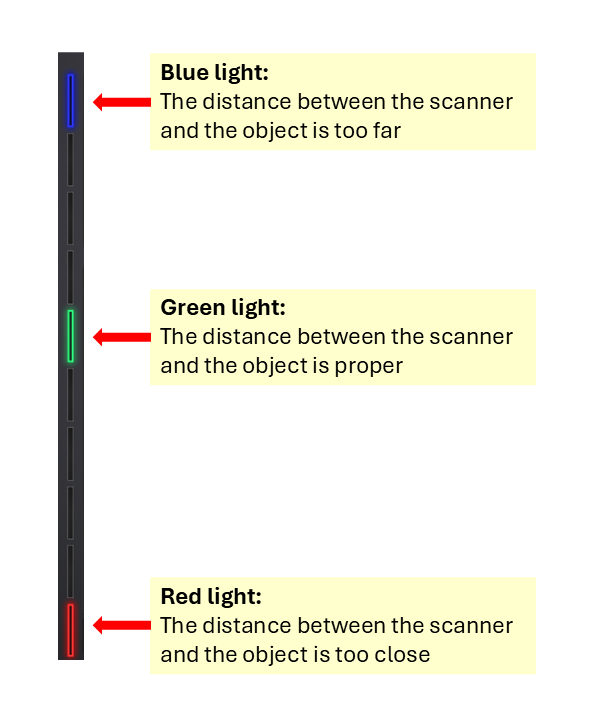
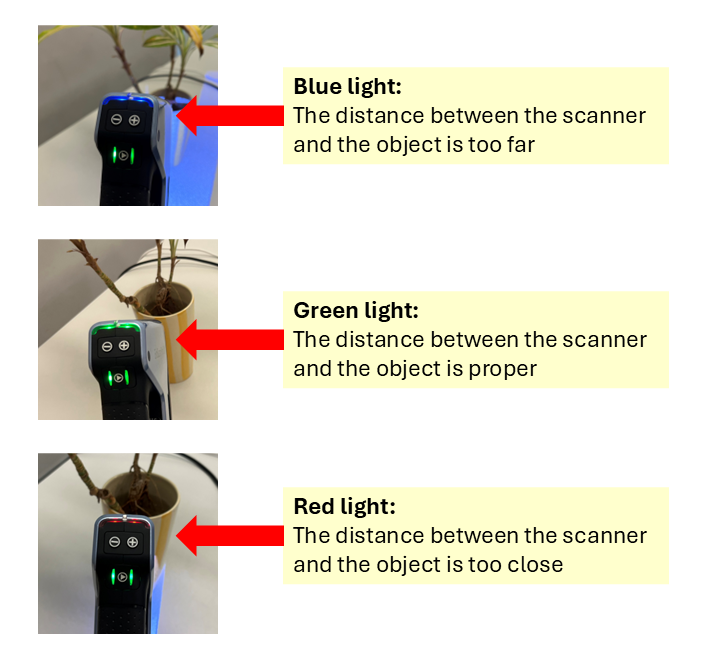
Maintain an appropriate distance between the scanner and the object:
- The rangefinder on the left side of the screen will turn green.
OR
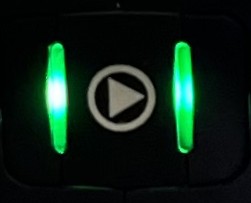
- The LED light on the scanner will turn green.
2.3. Adjust the Brightness
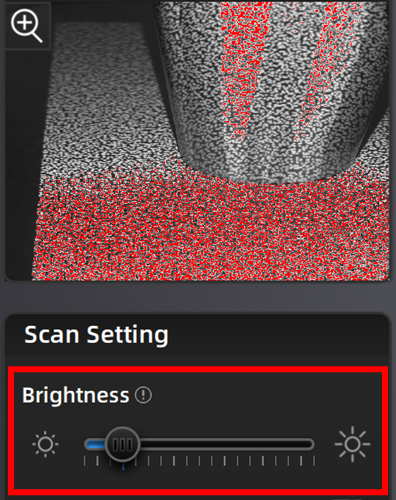
Ensure the camera preview has proper brightness:
- The object is clearly visible with minimal red displayed.
How to adjust:
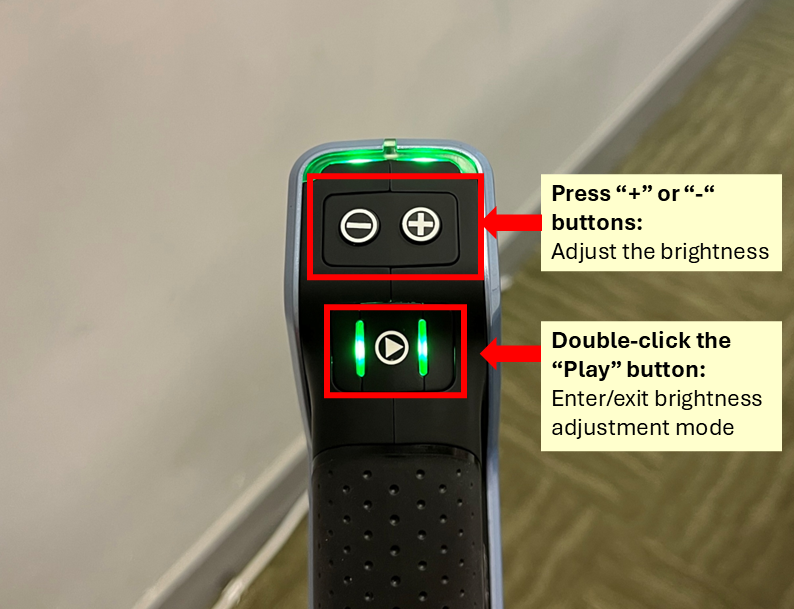
- Double press the “Play” button on the scanner to enter or exit brightness adjustment mode.
- Adjust the brightness using the “+” or “-“ buttons on the scanner.
OR
- Drag the slider under the camera preview to adjust brightness.
3. Scanning the Object
3.1. Start Scanning
- Click the “Start” button on the screen
OR - Press the “Play” button on the scanner to start scanning.
3.2. Monitor Progress
- Watch the live feed on the screen to monitor progress while scanning.
- Adjust the scanning path as needed to capture all details.
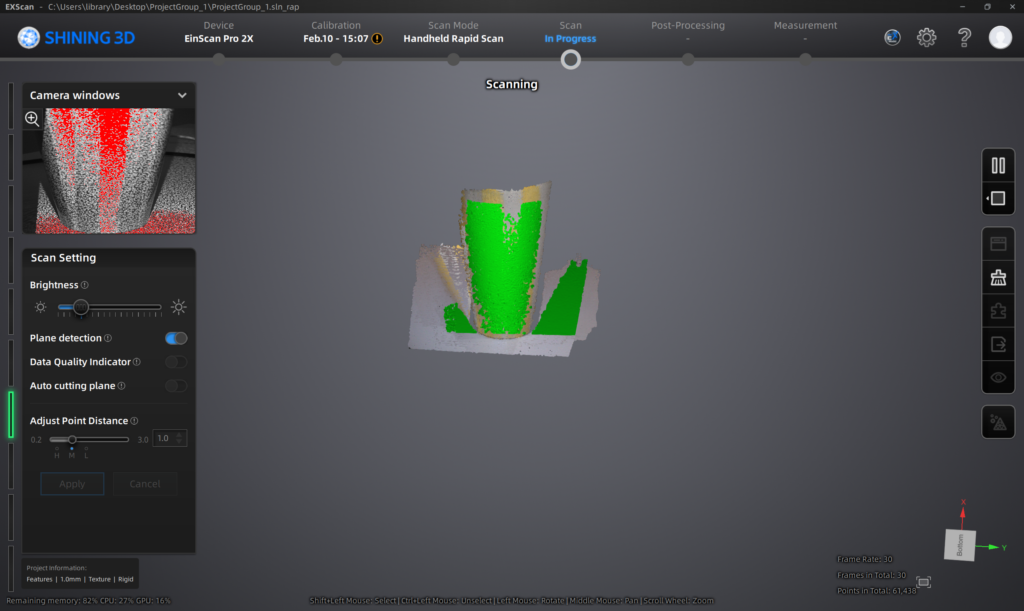
Tips for scanning:
- Hold the scanner perpendicular to the surface for accurate data capture.
- Move the scanner smoothly and steadily around the object to avoid missing details.
- Keep the correct working distance between the scanner and the object at all times.
- Adjust the brightness based on lighting conditions and the texture of the object.
- Make sure the object stays completely still throughout the scan.
Note:
To pause scanning, click “Pause” on the screen or press “Play” on the scanner. The data saves automatically.
3.3. Edit Scan
- You may edit the scan during a pause. Use the editing tools to adjust the scan data.
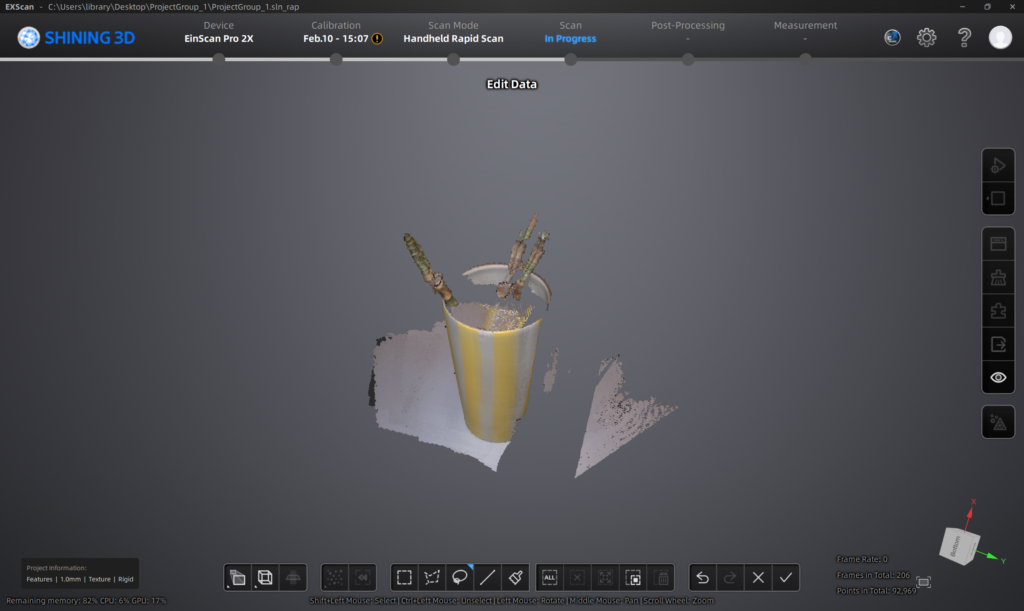
- Click “Apply” to finalise the editing; the edited data will be saved automatically.

Note:
If the scan result is unsatisfactory, delete the existing data, adjust the settings, and restart the scan.
3.4. Finish Scanning
- Check that all necessary data has been captured. If the scan is complete, continue to post‑processing.
Note:
If the scan result is unsatisfactory, delete the existing data, adjust the settings, and restart the scan.
Post-Processing
1. Generate Point-cloud
- Click “Optimise and save point cloud” to generate the optimised point‑cloud 3D data.
Note:
If necessary, export the point cloud as an .asc file.
on right side of the screen
2. Create Mesh
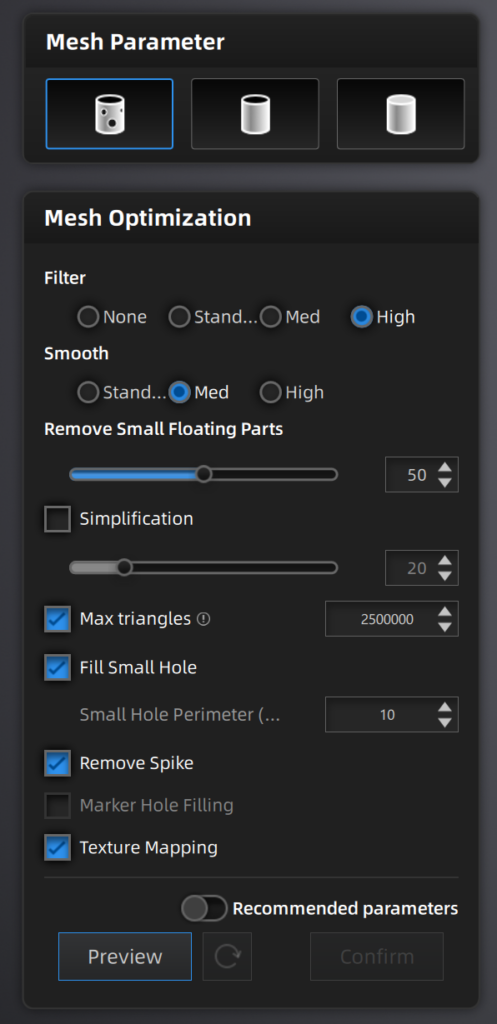
- Click “Mesh Model” to generate the mesh.
- Modify the post‑processing settings to achieve the best fit.
Note:
If any further steps are required (e.g., remapping or preparing for 3D printing), ensure that all holes in the 3D model are filled.
on right side of the screen
Exporting the Model
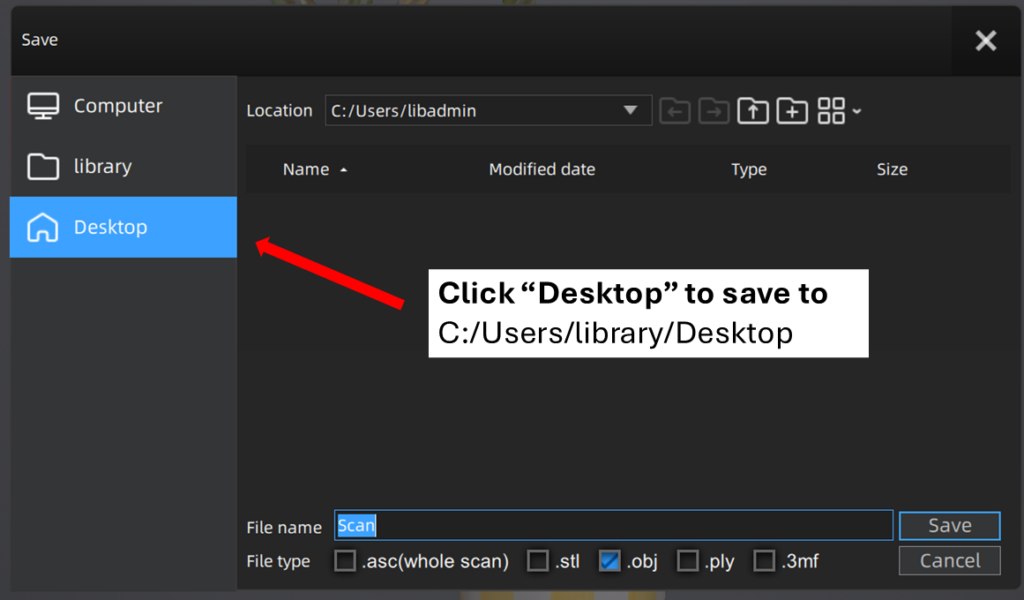
- Save the final 3D model in the desired format (e.g., STL, OBJ) for 3D printing or other uses.

- The default export location is invalid. Click “Desktop” to save the file to the desktop.
Note:
After completing the scanning and editing, users should transfer their files online or to their own storage devices. Files saved in laptops will be erased when the laptop is rebooted.